Watch caterpillars grow
Order a cup of live caterpillars, watch them spin chrysalises on your kitchen counter, and release real butterflies in your Houston backyard about three weeks later.
If you want one summer activity that actually earns a spot on the counter, this is it. You order a small cup of live caterpillars, they eat and grow for a week or so, hang upside down and turn into chrysalises, and then real butterflies climb out in your kitchen. Our kids checked on the cup more often than they checked the TV, and the morning the first butterfly emerged there was genuine shouting. It is part science fair, part magic trick, and it runs on its own once the caterpillars arrive.
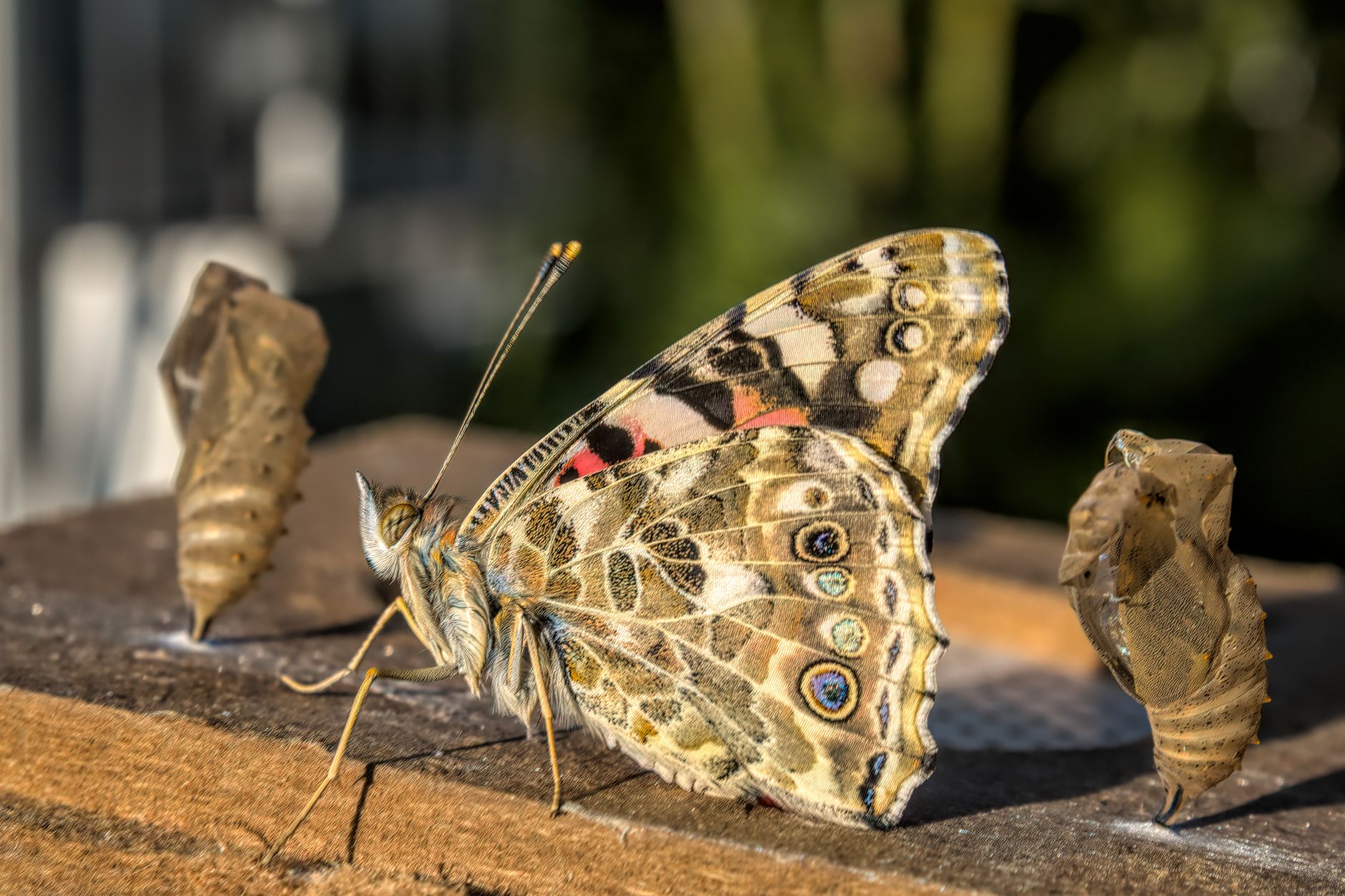
The species you almost always get is the Painted Lady. That matters in Houston: Painted Ladies are native here and stream up through Texas from Mexico every spring, so releasing them in your own yard is appropriate rather than the kind of thing that worries a biologist. You are not introducing anything strange to the neighborhood.
How it works, start to finish
The whole life cycle runs about three weeks from the day the caterpillars land on your porch. Here is the rough shape of it so you know what you are watching for.
- Days 1 to 10, the eating phase. The caterpillars stay in their original cup with the food already at the bottom. You do not open it, feed it, or clean it. They will roughly triple or quadruple in size and leave webbing and little dark specks (frass, which is the polite word for caterpillar poop) all over the cup. That is all normal.
- The chrysalis. One by one they crawl to the top of the cup, attach, and hang in a J shape, then harden into a chrysalis. Leave them completely alone for a day or two while the shells set.
- Moving them. Once the chrysalises are firm, you transfer the paper or lid they are attached to into the mesh habitat and pin or tape it to the side. This is the one slightly fiddly step, and it is a job for grown-up hands.
- Days 7 to 10 later, emergence. The butterflies break out, usually in the morning, and hang while their wings dry. You may see a few drops of reddish fluid called meconium. It looks alarming and is completely harmless leftover from metamorphosis, not blood.
Parent tip: Tape a piece of paper next to the habitat and have your child draw the cup every day. Flipping back through a week of drawings to see how fast the caterpillars grew turns it into a real keepsake, and it is the kind of thing teachers love seeing over summer.
Ordering for a Houston summer
Most kits are sold two ways: a full habitat-plus-caterpillars set the first time, then a cheaper refill cup of caterpillars on its own once you already own the mesh enclosure. If you think you will do this more than once, the second round costs a lot less. The well-known brands here are Insect Lore, Carolina Biological Supply and the Nature Gift Store, and many Houston-area craft and toy shops carry the boxed habitat kit too.
The catch with our climate is heat. Caterpillars ship best when temperatures are roughly between 50 and 90 degrees, and a cup of larvae baking in a mailbox in July is bad news. A few honest tips:
- Pay for faster shipping on the live cup. The day or two you save genuinely matters for survival.
- Order early in the week so the caterpillars are not sitting in a distribution center over a weekend.
- Aim for late spring or early fall if you can, or order on a cooler stretch. Deep-July deliveries are the riskiest.
- Be home on delivery day and bring the cup inside right away to your air-conditioned kitchen, away from direct sun.
Live insects are not returnable, and most sellers guarantee that only about three of five caterpillars will make it to butterfly. Go in expecting that one or two may not survive, and talk it through with your child ahead of time so a quiet chrysalis is a gentle science lesson rather than a meltdown.
Who it is good for
The sweet spot is roughly ages 4 and up, mostly because the daily patience and the no-touching rule are hard for toddlers. That said, little ones still love peering at the cup and watching a butterfly fly off, they just need you driving the project. School-age kids can practically run it themselves and it pairs beautifully with a life-cycle worksheet. The only real care task during the eating phase is leaving the cup alone, which is harder than it sounds.
Releasing them the right way
Give the new butterflies a couple of days in the habitat so their wings fully strengthen, and offer them sugar water on a cotton ball or a slice of orange. When you let them go, pick a warm afternoon above about 60 degrees, dry, ideally an hour or two before sunset so they can find shelter for the night. In Houston that is almost any non-stormy spring or summer evening. Open the habitat outside, let them leave on their own time, and resist the urge to pull them off the mesh.
If you want them to stick around your yard afterward, Painted Ladies love lantana, zinnias and pentas, all of which shrug off Houston heat. A few dollars of flowers turns the release into a season-long encore.
If they love it
This same patient watching pays off on a free outing too. The parks and playscapes around town are full of butterflies and caterpillars in summer if you slow down and look, and the Cockrell Butterfly Center at the Houston Museum of Natural Science is the obvious next step once your home butterflies have flown.
Frequently asked
The kidfun editorial team field-checks every guide against its official source before publishing.