The Best Dirt Bikes for Kids: Choosing the Right Bike for Your Child
A no-nonsense first dirt bike guide from a Houston parent: how to size a bike to your kid, the gear that is non-negotiable, and real places to ride near town.
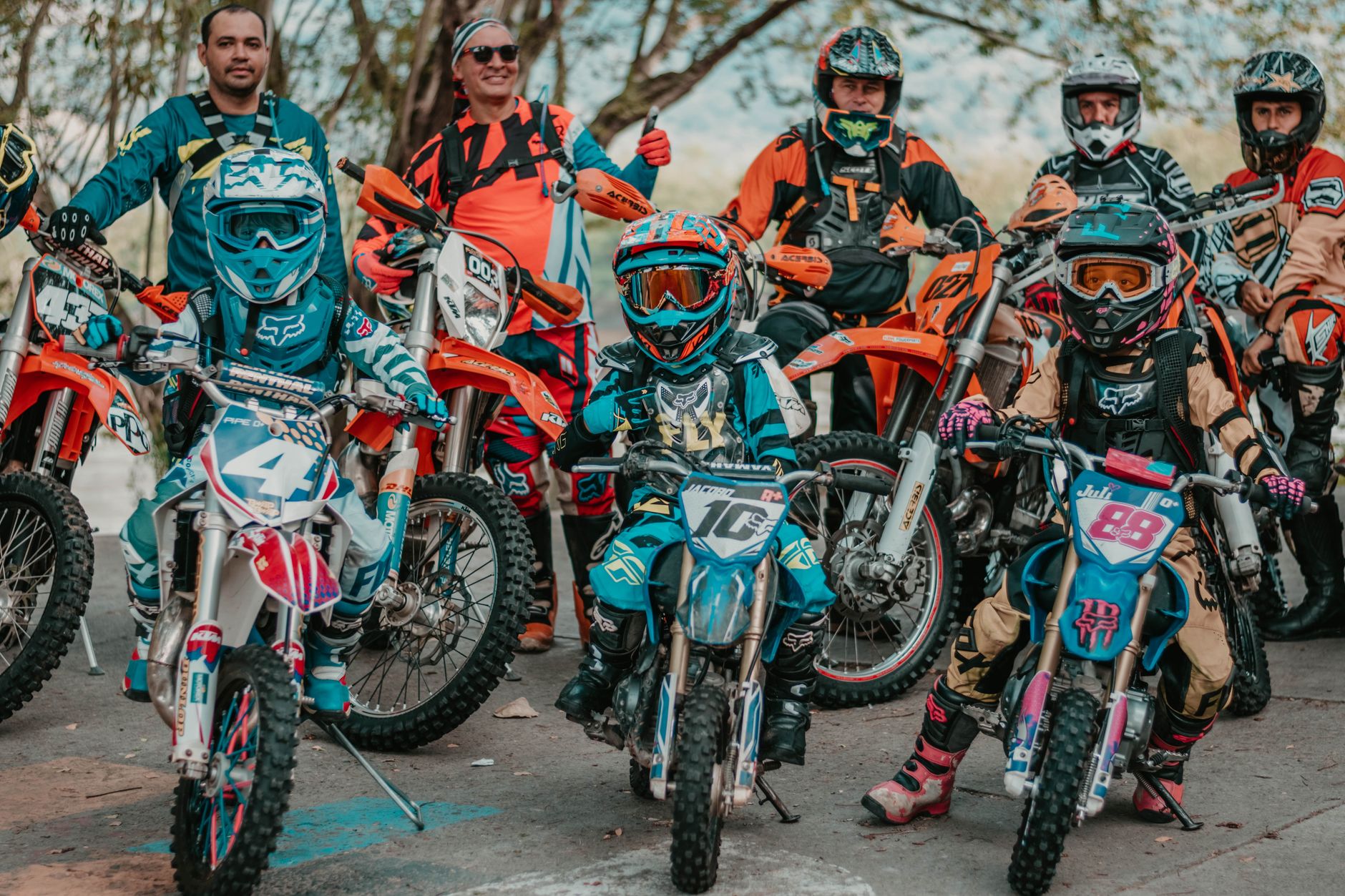
Let me be honest about what this page is. Kidfun is a guide to doing things with Houston kids, not a product review site, and we do not sell bikes or take affiliate money. But a steady trickle of local parents land here every spring after a kid comes home from a friend's place buzzing about dirt bikes, so here is the straight talk I wish someone had given me: how to pick a sensible first bike, the gear you cannot skip, and where families around Houston actually ride. For brand-by-brand spec chasing, the motorcycle press and your local dealer will serve you better than we can.
Size the bike to the kid, not to the birthday
The single most common mistake is buying big so the bike "lasts." A dirt bike a child cannot flat-foot is a dirt bike that tips over at every stop, and nothing kills a beginner's nerve faster than dropping a machine they cannot pick up. Forget the age number on the box and measure your child's inseam instead: have them stand with shoes on, feet flat, and measure from the floor to the crotch. Then match that to the bike's seat height.
The rule of thumb most riding parents use: a true beginner should be able to touch the ground with both feet, or at minimum get the balls of both feet down solidly, while seated. As confidence grows you can move up to a taller bike where only one foot reaches. Here is the rough landscape, with the loud caveat that these bands overlap and a cautious eight year old and a fearless eight year old need very different bikes:
- Roughly ages 4 to 7: small 50cc machines or an electric equivalent, seat heights around the high teens to low twenties in inches. Automatic, no gears to think about.
- Roughly ages 7 to 11: 50cc to 110cc, seat heights in the low-to-mid twenties. This is where most kids spend a few years.
- Roughly ages 11 and up: 110cc and beyond, taller seats, often with a manual clutch once they want to progress.
Engine size is not the same as speed you can live with. Many youth bikes have a throttle limiter screw and an adjustable idle so you can dial the top speed way down for the first month, then open it up as skills catch up. Ask the seller to show you where it is before you hand over money.
Electric or gas, automatic or clutch
For a first bike, simpler is almost always better. Electric bikes are quiet, have no clutch or gears, start with a button, and let you ride in a neighborhood without the whole street knowing. The trade-off is run time: you get a session, then a charge. Gas bikes run as long as there is fuel and tend to cost less up front for a given size, but they are louder and need real upkeep.
On the gas side, the friendliest beginners use an automatic or "auto-clutch" setup so a child cannot stall, which removes one whole layer of frustration. A great example of how a beginner machine should behave is the Honda CRF50F: it is a small four-stroke with an automatic clutch and a simple three-speed shift, so there is no clutch lever to master and no stalling. (The older internet myth that it is a finicky two-stroke you have to mix oil and gas for is simply wrong, it is a four-stroke and takes straight gas.) Whatever badge you choose, the questions that matter are the same: can my kid flat-foot it, is it light enough for them to pick up alone, and how simple is it to operate.
Be skeptical of high-strung 65cc and 85cc race two-strokes marketed as "kids' bikes." Machines like a Kawasaki KX65 or the small Suzuki RM two-strokes are competition tools with abrupt powerbands meant for kids already racing, not first bikes for the backyard. Starting a nervous beginner on one is how families end up with a scared child and an expensive garage ornament.
The gear is not optional
This is the part where I will not soften it. Texas dirt is studded with caliche rock and goatheads, and kids fall while they learn, that is the whole deal. A proper helmet rated for off-road use comes first, then goggles, then over-the-ankle boots, gloves, and at minimum knee and elbow protection. A chest and back protector is cheap insurance for the price of one trip to the ER you avoided. Buy the helmet to fit now, not to grow into, because a loose helmet does not do its job.
Where Houston-area families actually ride
Riding a dirt bike on public streets or most neighborhood greenbelts is not legal, and "the back field" gets old fast. The good news is the Houston area has real tracks with beginner and "peewee" areas built for small bikes, so your kid learns somewhere graded and supervised rather than in a ditch:
- Rio Bravo MX on the east side (11610 N Lake Houston Pkwy, Houston) is the closest in-town option for many families and runs a dedicated peewee track for the littlest riders.
- 3 Palms Action Sports Park in Conroe, just up I-45, is a large multi-track facility with kids' tracks and even balance-bike racing for the four-and-under crowd at its evening events.
Gate fees, open days, and what each track requires (a signed waiver, and often a parent present) change with the season, so check each park's own site before you load up the truck. If you are weighing whether your child is even ready, an introductory lesson with a local coach is money well spent and far cheaper than learning the hard way.
If a bike is a bigger leap than you want
Plenty of kids get the itch out of their system without a garage full of two-stroke smell. If what your child really wants is to be moving and outside, Houston has a lot of lower-stakes ways to scratch that itch. Start with our roundup of the best parks and playgrounds in Houston, which have paved loops perfect for pedal bikes and balance bikes, then browse our sports and ideas for older kids sections for more active, get-them-tired options around town.
Bottom line: pick the smallest bike your kid can comfortably handle, spend on gear before you spend on horsepower, and take them somewhere built for beginners. Do that and you are setting them up for years of fun instead of one scary afternoon.
Frequently asked
The kidfun editorial team field-checks every guide against its official source before publishing.